Everyone Can Build an App Now. But Who Is Building the Experience?
Shubham
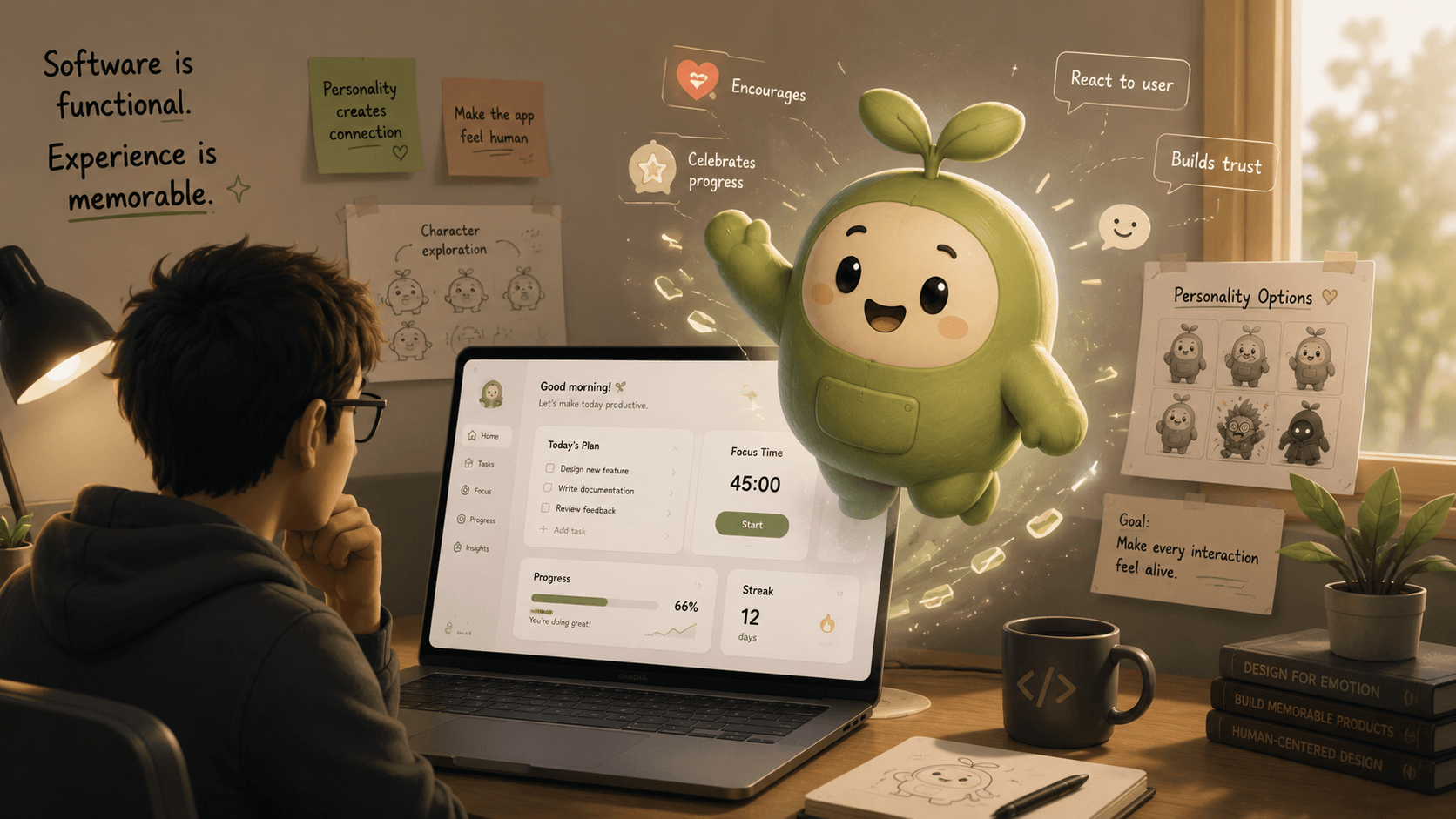
I have been thinking about something while building my current app.
With AI, building an app has become much easier. You can have an idea, start writing prompts and code, generate a UI, connect a database, build the backend, and get something working surprisingly quickly. You still need to know what you are doing if you want to build something good, but the barrier to getting an idea into software has definitely become much lower.
And I think that is going to create an interesting problem.
If more and more people can build software, then simply being able to build an app will become less of a differentiator. The features will still matter, of course. The product still needs to solve a real problem. But if ten people can build ten similar AI apps using similar tools, similar components and similar patterns, I don't think having one more feature will always be enough.
So I started wondering: if everyone can build the software, what makes one product feel different from another?
Maybe it is the experience.
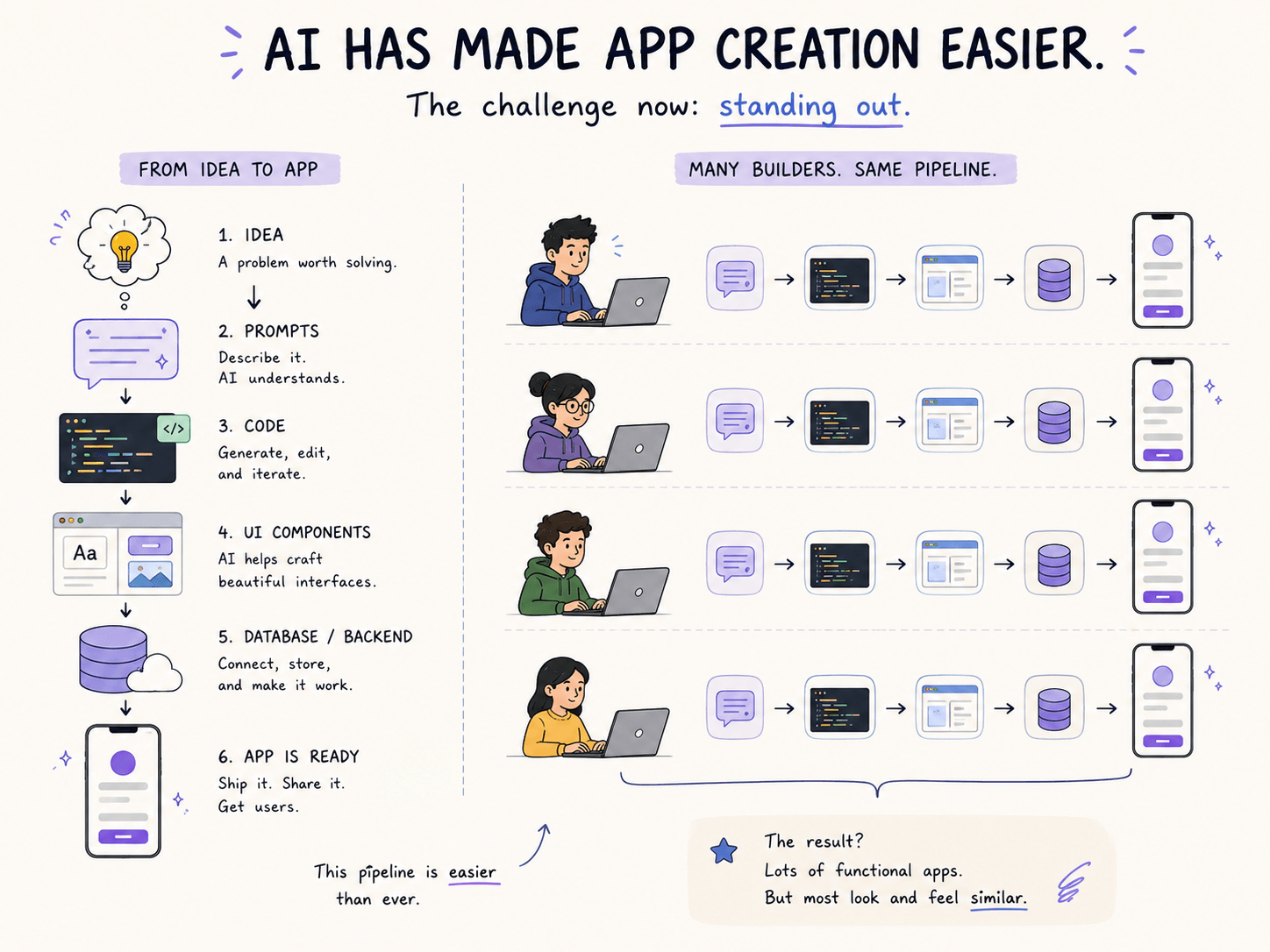
I don't mean that we should stop building better software. Quite the opposite.
But when the cost of creating software keeps going down, the things around the software may start becoming more important. The personality of the product, the way it communicates, the small interactions, the visual language, the details that make someone remember it.
That is where this whole character idea started for me.
This started with a character
I am currently building an app, and while thinking about its experience, I realised that a character could actually fit the product.
Not because I think every app needs a mascot. I really don't. Putting a random cute character into a product just because AI can generate one would probably make the product worse.
But the type of interaction I am building feels like it could benefit from something that can guide the user, react to what they do, celebrate something, or simply exist as a personality inside the product.
The first product that came to my mind was Duolingo.
Duolingo is a good example of a product where characters are much more than illustrations. The characters have different personalities, expressions and behaviours. They can make an otherwise simple interaction feel funny, friendly, dramatic or even slightly annoying.
And that made me ask a very basic question:
How do you actually create a character like that?
I realised I had no idea.
I can build the application. I can write the logic, APIs and database. I can make a character appear on a screen.
But making that character actually feel like a character is a completely different problem.
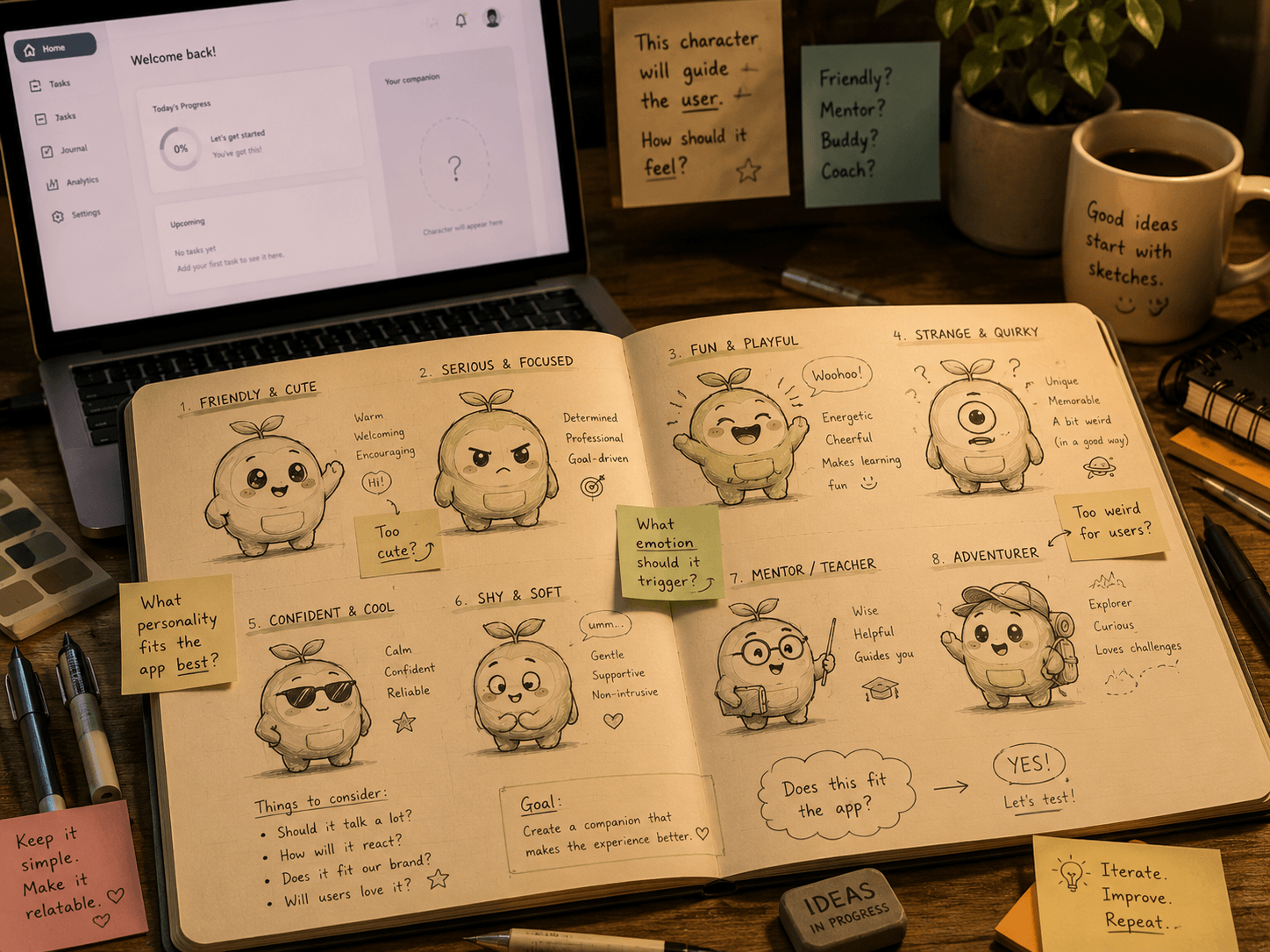
I am not trying to become a character designer
I should probably make this clear.
I am not a professional character designer, illustrator or animator. I don't know all the professional tools or processes used to create characters for games, animation or products.
I am approaching this from the developer side.
I have an app. I think a character could improve its experience. Now I want to understand enough about character design to actually create one that makes sense.
And the more I started looking into it, the more interesting it became.
Because I initially thought character design was mostly about making something visually good.
It turns out that is only one part of it.
A good-looking character is not necessarily a good character
You can make a beautiful illustration and still create a terrible character.
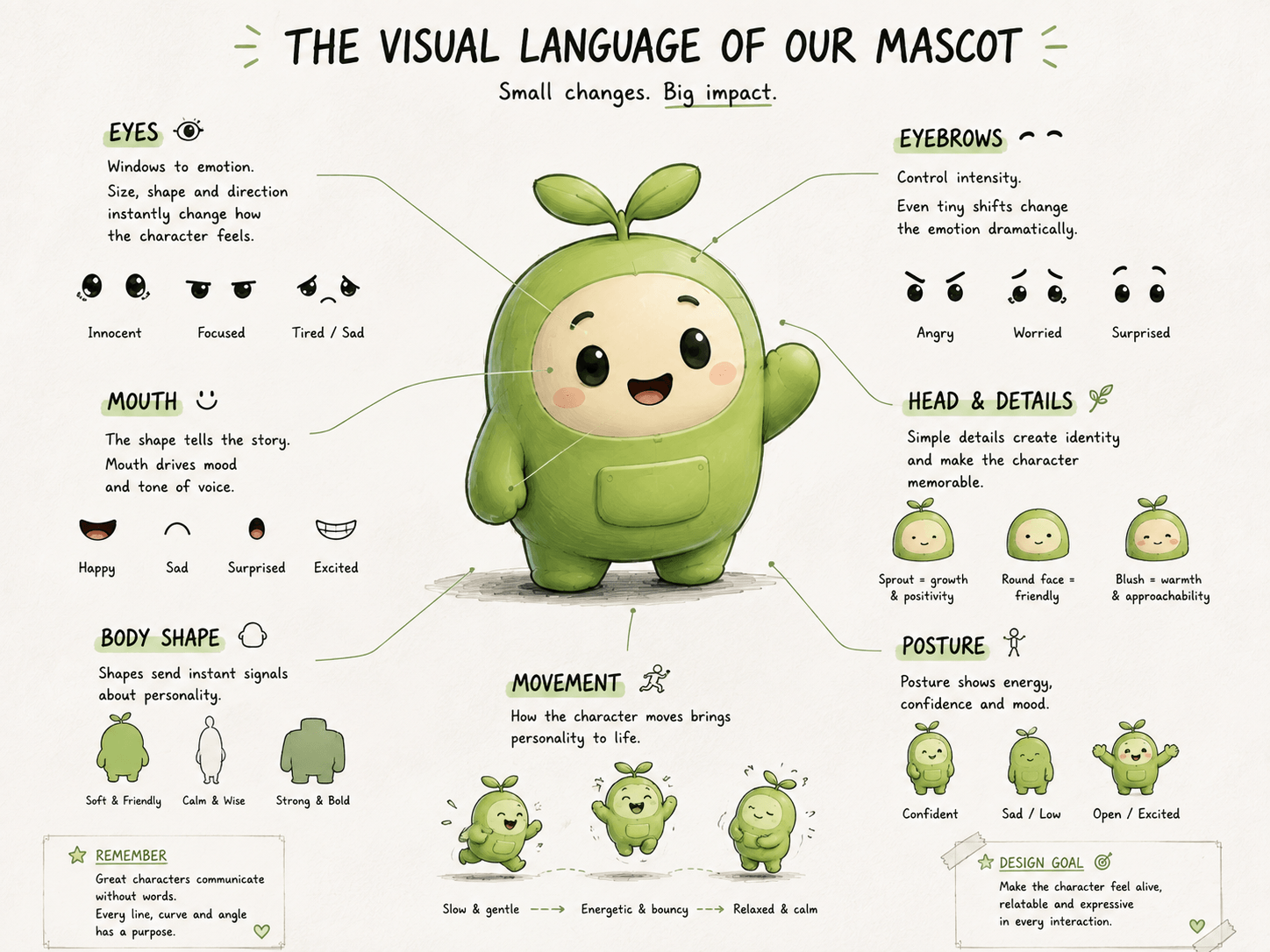
A character becomes interesting when it communicates something.
Think about how quickly we make assumptions about people just from their appearance. Someone standing with their arms crossed and looking serious gives you a different feeling from someone standing with an open posture and a huge smile. We make these assumptions almost instantly.
Characters work in a similar way.
The eyes can make a character look curious, tired, confident or scared. Eyebrows can change the intensity of an expression. The mouth can change the mood. The shape of the body can make someone feel strong, soft, cute or intimidating. Even the way a character stands can tell you something about its personality.
Then movement adds another layer.
A character that moves slowly feels different from one that jumps around everywhere. A character that reacts dramatically to everything feels different from one that barely reacts.
So I started thinking about character design less as:
"How do I draw something good?"
and more as:
"How do I visually communicate a personality?"
That is a much more interesting problem.
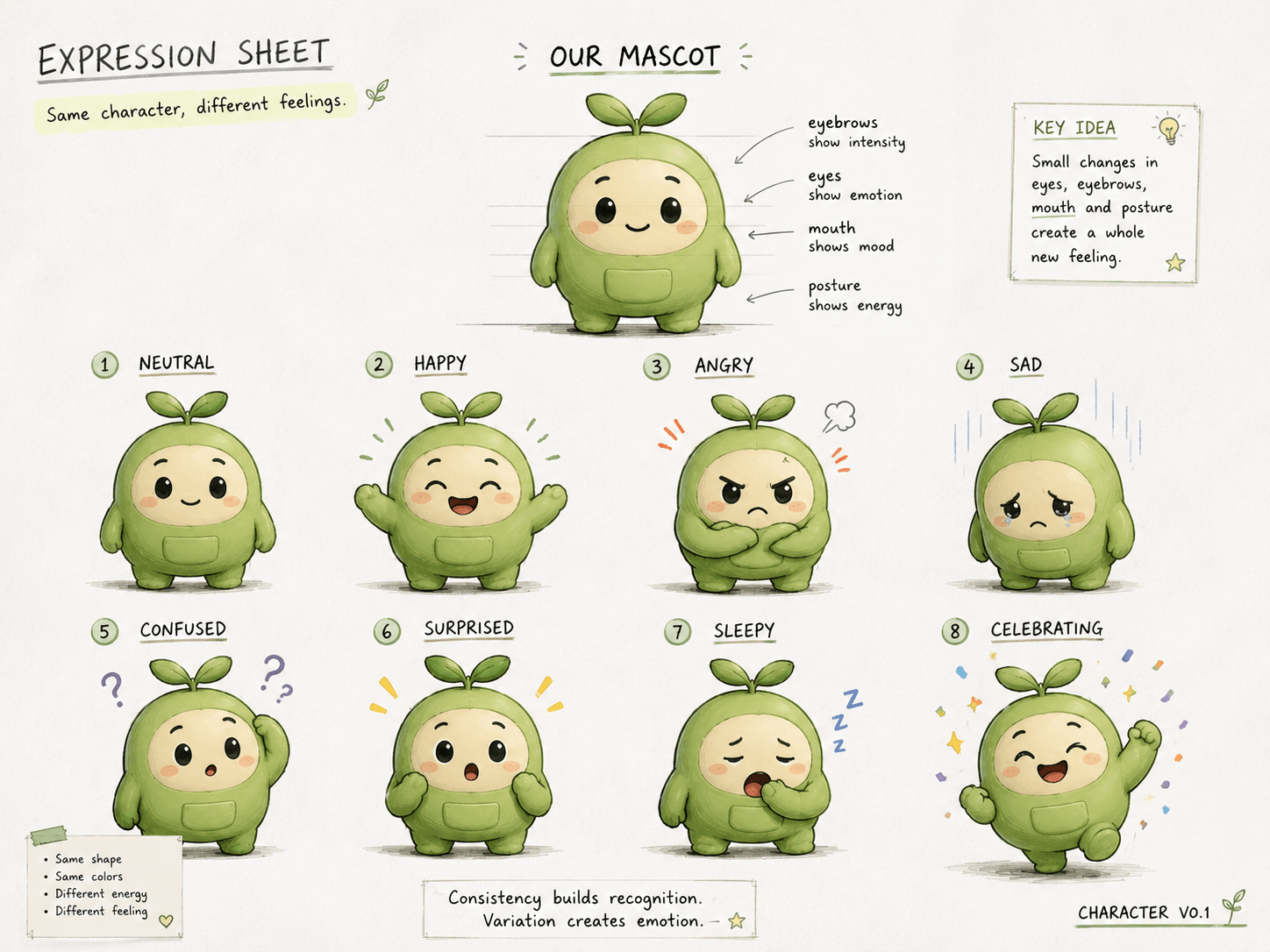
This was probably the first thing that changed how I was looking at the problem.
The goal isn't simply to make a character look good.
The goal is to make the character read correctly.
You should be able to look at it and get some idea of what it is feeling, even before it says anything.
That makes character design surprisingly close to interface design.
In UI, we use color, spacing, icons, typography and hierarchy to communicate information.
With a character, we can use eyes, expressions, posture, shape and movement to communicate emotion and personality.
Both are visual languages.
Characters can become part of the interface
This is where character design becomes especially interesting to me as a developer.
We normally think about an interface as buttons, cards, forms, menus, text, icons and animations. We design these things so users understand what is happening and know what to do next.
But a character can communicate too.
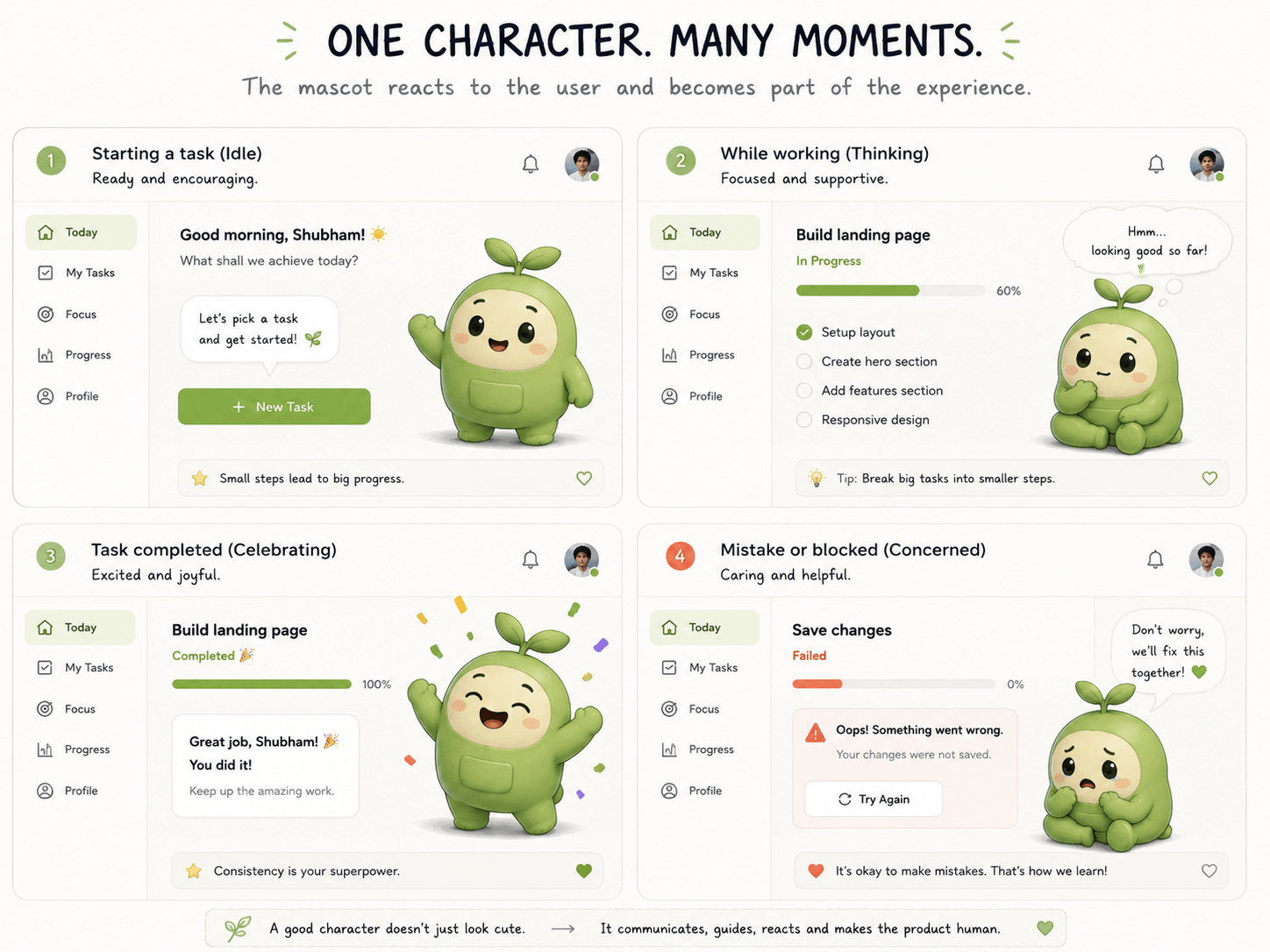
Imagine you complete something successfully. Instead of only showing a checkmark and a "Completed" message, your character reacts to it.
You make a mistake. The character reacts.
You are thinking about what to do next. The character is thinking with you.
You complete something difficult. The character celebrates.
You come back after being away for a while. The character welcomes you.
None of this should replace good UX. The user still needs to understand what happened. But the character adds another layer to the interaction.
It gives the interface a personality.
This is the part I find really interesting: the character doesn't have to sit outside the UI. It can become part of the UI.
It doesn't have to be a cute mascot
Another thing I am learning is that when we say "character in an app", we immediately imagine something cute.
But there is no reason it has to be that way.
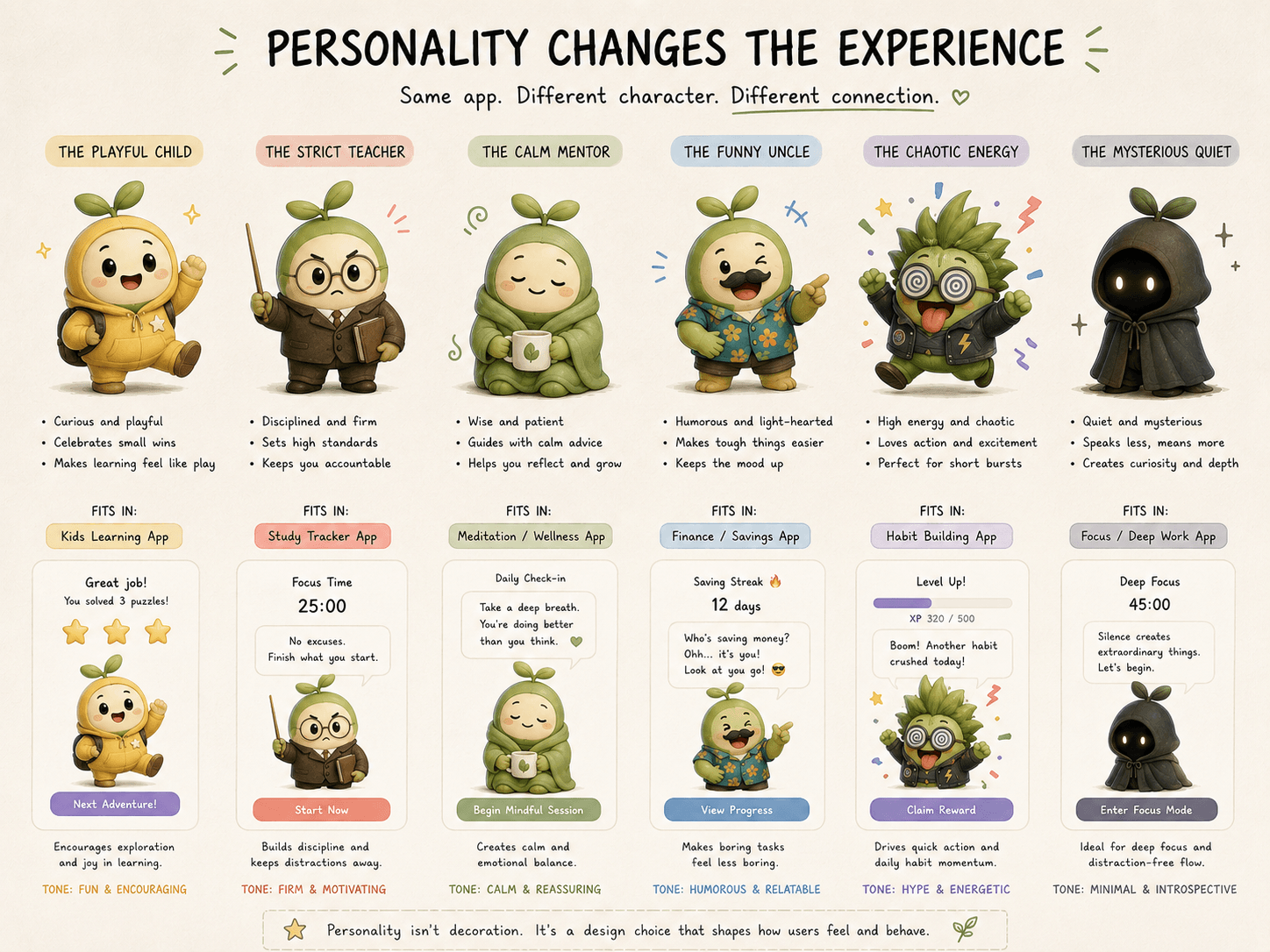
A character could be a strict teacher, a funny uncle, a calm mentor, an annoying little guy who keeps reminding you to finish something, a quiet person who communicates mostly through expressions, or something completely strange that doesn't even look human.
The important question is not:
"Can I make a cute character?"
It is:
"What kind of personality makes sense for this product?"
That personality can influence the entire experience.
A character that feels playful will make the same interface feel different from a character that feels serious. A calm character will create a different feeling from a chaotic one.
The character becomes part of the visual language of the product.
AI makes this experiment possible for me
This is where AI becomes interesting.
If I wanted to explore character design a few years ago, I probably would have stopped at the first question because I am not an illustrator. I would need to find a designer, explain the idea, create concepts, iterate on them, create expressions and poses, and then figure out animation.
Now I can experiment much more easily.
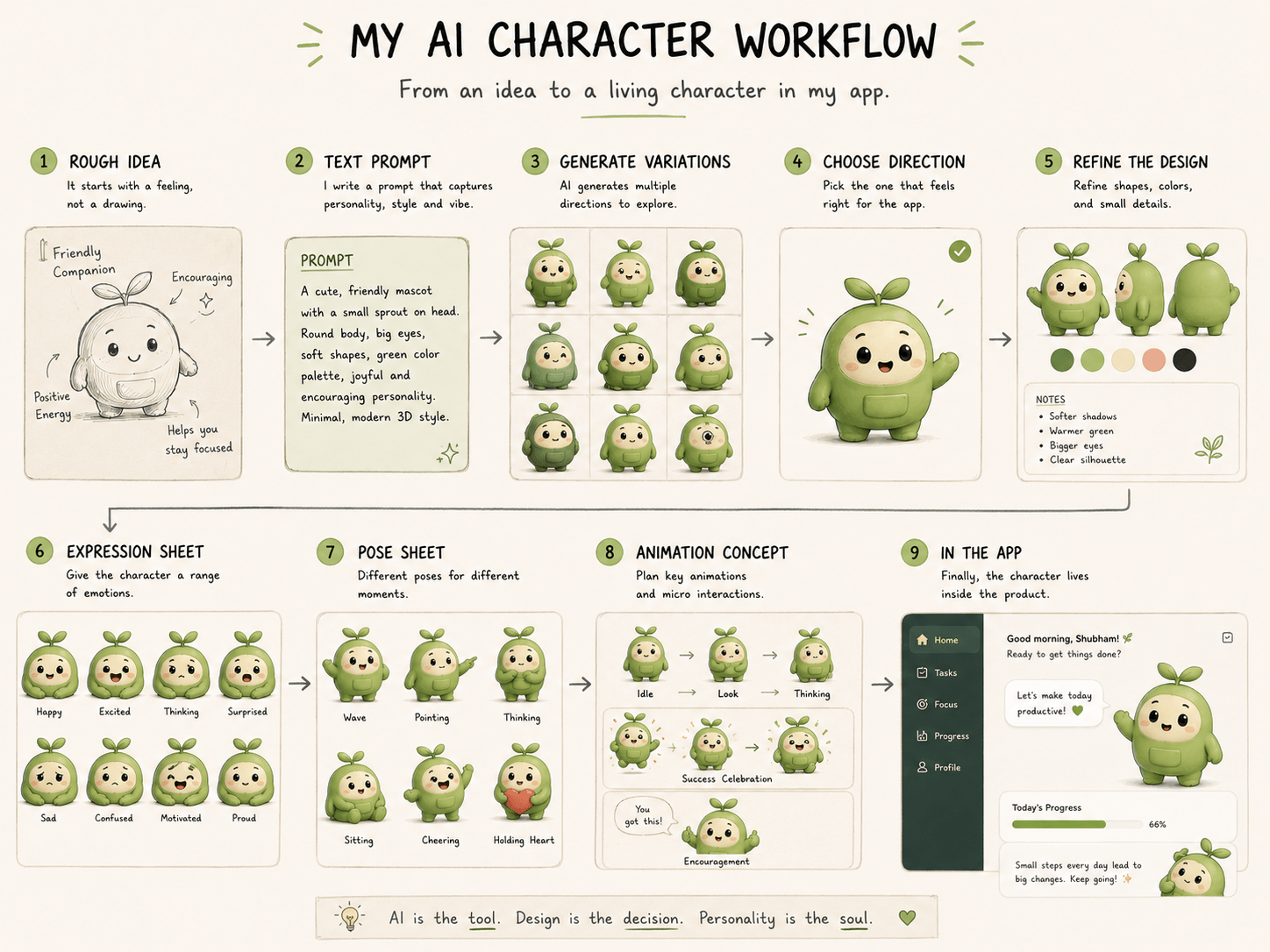
I can generate different visual directions, explore different personalities, create expression sheets, try different poses and iterate much faster.
But I don't think generating an image is the same thing as designing a character.
AI can give you a hundred beautiful images and still fail to give you one consistent character.
You still need to decide what the character represents. You need to understand its personality. You need consistency across different expressions and poses. You need to think about how the character will behave inside the product.
AI simply makes experimentation cheaper.
And for someone like me, that changes the equation.
I don't have to already be a professional designer to start exploring the subject.
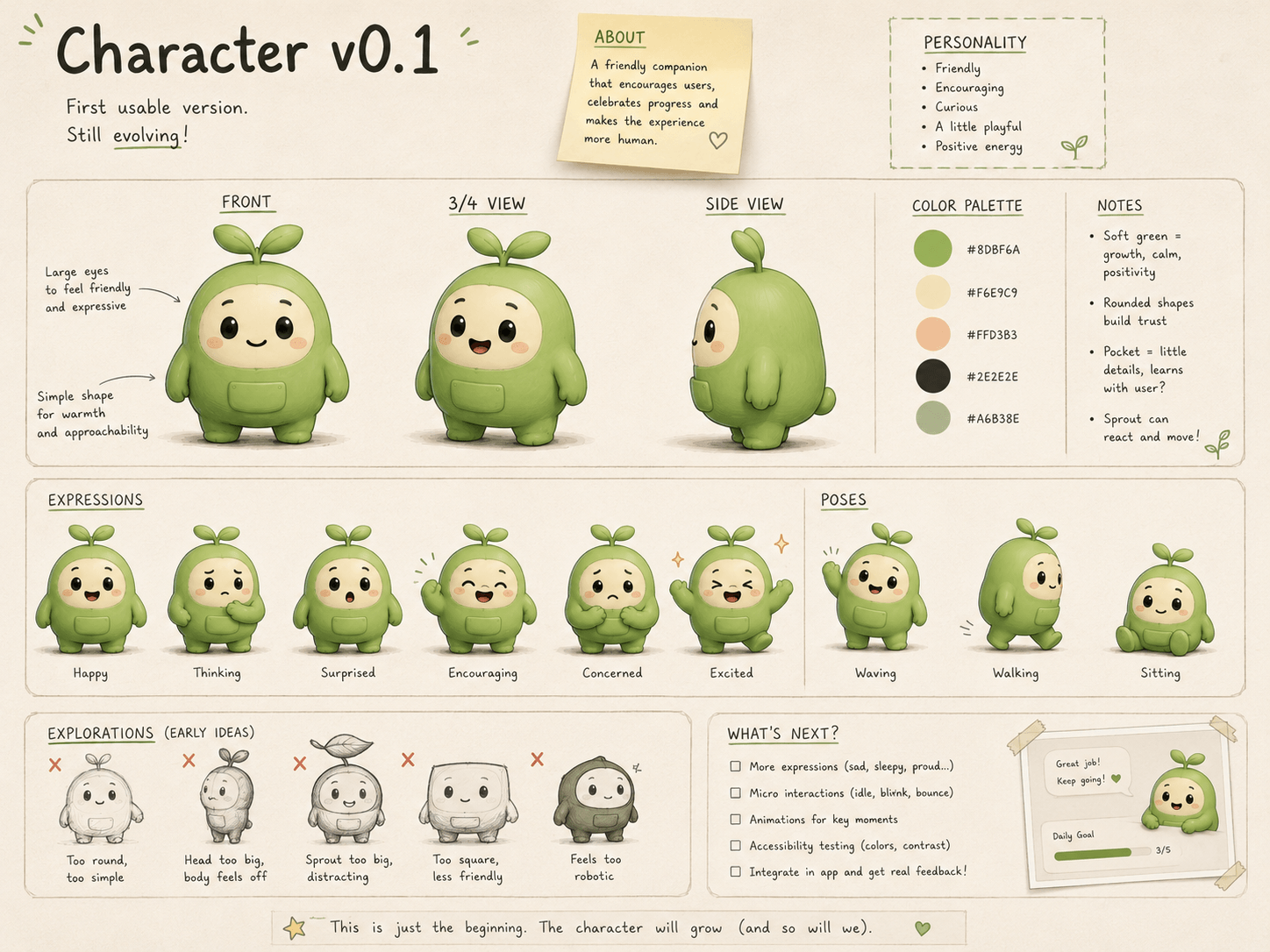
So I decided to actually build one
Instead of only reading about character design, I want to make this an experiment.
I want to build a character for the app I am working on and document what I learn along the way.
I want to understand how you go from a simple thought like "I want a character" to an actual character system that can live inside a product.
What should it look like? What personality should it have? How do I make it recognisable across different expressions and poses? How many expressions does an app actually need? How should it react to different situations? How do I animate it? And finally, how do I put all of this into a real application?
I have also started looking into the tools that designers and animators use for this. There is a whole world of illustration, character design, rigging, animation and motion design that I have barely touched.
I am still figuring it out.
But that is actually what makes this interesting.
I am not learning character design because I suddenly want to become a character designer. I am learning it because I want to build a better product experience.
Maybe the next advantage is the experience
I don't know if my original observation is completely right yet.
But I keep coming back to it.
AI is making it easier for more people to build software. That is an incredible thing. More people can turn ideas into working products without needing a huge team or spending months just getting the first version running.
But if building software becomes easier, then the software itself may become less special.
The interesting part may become what we build around the software.
The personality of the product. The interactions. The visual language. The way it responds. The small details that make someone smile. The things that make one product feel different from another even when they have similar features.
Maybe we are moving from a world where the first question was:
"Can you build this?"
to a world where another question becomes equally important:
"Can you make people want to use it?"
I don't think every product needs a character. And I definitely don't think AI-generated mascots are going to magically solve product design.
But I do think there is an interesting opportunity here.
When a character genuinely fits the product, it can become more than decoration. It can become part of the product's identity, part of its communication and part of the user's experience.
That is what I want to explore.
I am going to try building one for my app, using AI wherever it makes sense, while learning the parts of character and visual design that I don't know yet.
I have no idea whether the final character will be great.
But I think the process will be interesting.
And maybe, while trying to teach a character how to react to a user, I will learn something about how to make software feel a little less like software.